How the Hazard Perception Test Works: A Complete Beginner's Guide
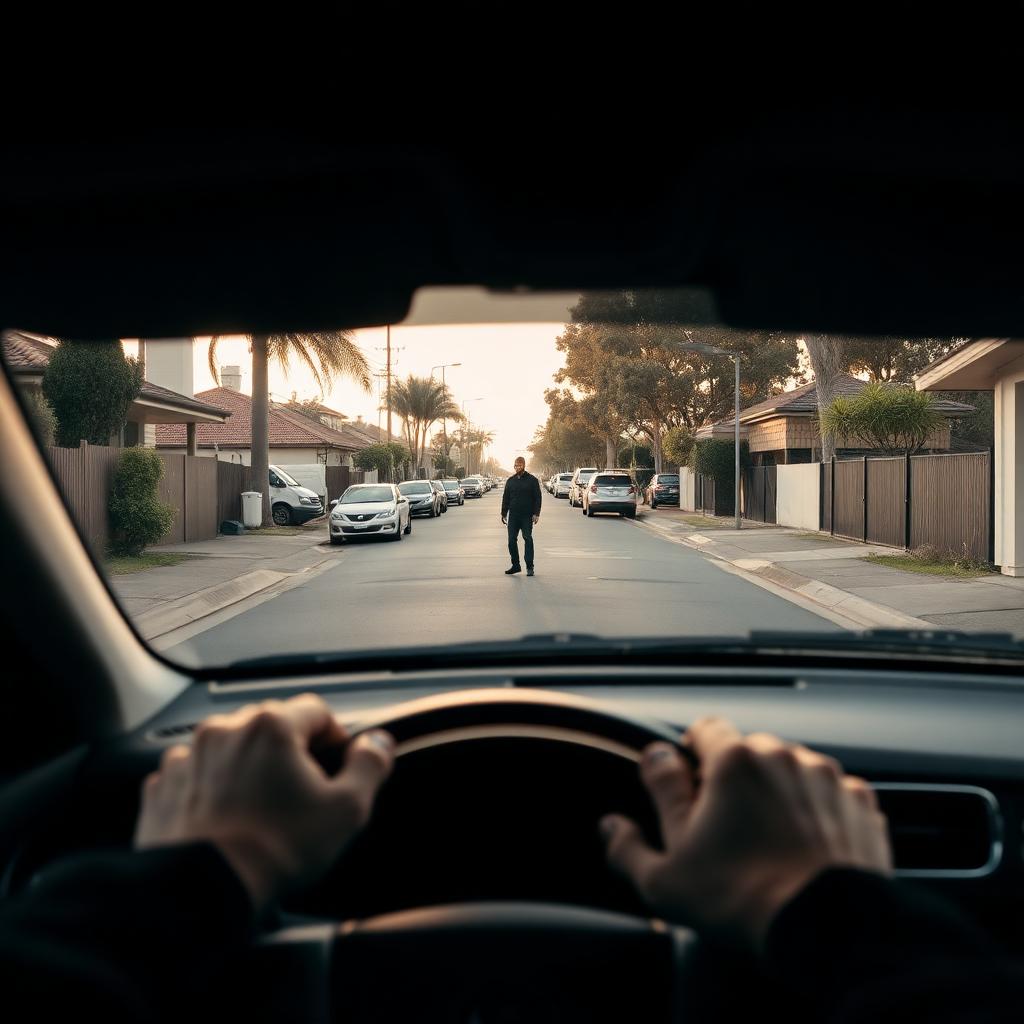
What You'll See in the Test
The HPT shows a series of short driving clips, either filmed on real roads or rendered as CGI, from the driver's point of view. Before each clip you're told what you're trying to do — for example, "You are stopped at an intersection and want to turn right" or "You are driving along the road and want to continue straight ahead." That instruction matters, because it shapes which events in the clip actually count as hazards for you.
You respond by clicking a mouse, tapping a button, or tapping the screen at the moment you judge it safe to act — or the moment you'd genuinely change what you're doing (braking, slowing, holding back) because of a developing hazard. There's no steering wheel and no pedals; the test measures your judgement, not your car control.
What Counts as a "Developing Hazard"
A developing hazard is something in the scene that is actively becoming a risk you need to respond to — not just anything unusual on the road. Common examples tested across the states include (see our full breakdown of every hazard category the HPT checks for):
- Pedestrians stepping onto the road, or emerging from between parked cars.
- Vehicles ahead braking suddenly or slowing unexpectedly.
- Cars or cyclists entering from side streets, driveways or car park exits.
- Vehicles merging into your lane or changing lanes across your path.
- Cyclists moving around a parked car or obstacle and into your lane.
A parked car with no one near it is not a developing hazard. The same parked car becomes one the moment a door opens or a pedestrian steps out from behind it.
Timing Matters More Than Speed
The HPT isn't a reaction-time test. Clicking too early — before the hazard is genuinely developing — usually counts as a wrong response, because you'd be reacting to something that isn't really a threat yet. Clicking too late, after the hazard has already passed or you'd have collided in the real world, also loses marks.
Victoria and Western Australia are explicit about this: each clip has a specific "safe response window," and you only score if you click inside that window. The lesson across every state is the same — the test rewards accurate judgement of when a real driver would act, not the fastest possible finger — and getting this wrong is one of the most common reasons learners fail the HPT.
How the Test Differs by State
| State | Number of Clips | Pass Mark | Format Notes |
|---|---|---|---|
| NSW | 15 clips (plus 2 practice clips first) | Not published as a percentage | Required before the Driving Test |
| VIC | 28 clips | 54% (15/28) | Practice questions with feedback given first |
| QLD | 25 CGI scenarios | Not published as a percentage | Required before the Q-SAFE practical test |
| SA | 25 scenarios | 52% (13/25) | Available online via mySA GOV |
| WA | 28 clips | Approximately 50% | Required before the Practical Driving Assessment |
| ACT | Format set by Access Canberra | Competency-based, not a simple percentage | Eligible after 3 months on a Learner Licence |
| TAS | Format set by Transport Tasmania | Pass/fail, retake immediately if failed | Free to sit, required before the Practical Driving Assessment |
| NT | Format set by the NT Government | Confirm with NT Government | Part of the standard learner-to-provisional pathway |
Figures above reflect published information at time of writing and can change — always confirm current format and pass requirements with your state's transport authority before booking.
How to Prepare

There's no shortcut around real driving experience. The learners who pass the HPT comfortably are almost always the ones who've done plenty of supervised hours and used those hours to actively scan the road — checking mirrors, watching side streets, noticing pedestrians before they step out. Ask your supervisor to point out hazards as they develop; talking through what you both see builds the same judgement the test is measuring. Not sure yet whether you've held your learner licence long enough to book? Check the HPT eligibility timing for every state before you plan a date.
Alongside that, read your state's official road user handbook or sample material — every authority publishes something, and it's the source of truth for what you'll actually be scored on. Use knowledge-based practice questions on our state practice pages to reinforce hazard-recognition concepts before test day.
Frequently Asked Questions
Related reading
- Every type of hazard the HPT checks for — a category-by-category breakdown of what actually counts as a developing hazard on screen.
- Why people fail the HPT (and how to avoid it) — the timing mistakes and misreads that trip up most learners on their first attempt.
- What happens if you fail the HPT — retake fees, waiting periods and what stays on your record, state by state.
- When you can actually sit the HPT — minimum learner hold times and eligibility rules across every state and territory.
- HPT and driving test pass rates by state — how supervised hours, learner periods and pass rates compare nationally.
Practice by State
- New South Wales (NSW) Hazard Perception Test practice
- Victoria (VIC) Hazard Perception Test practice
- Queensland (QLD) Hazard Perception Test practice
- South Australia (SA) Hazard Perception Test practice
- Western Australia (WA) Hazard Perception Test practice
- Australian Capital Territory (ACT) Hazard Perception Test practice
- Tasmania (TAS) Hazard Perception Test practice
- Northern Territory (NT) Hazard Perception Test practice